
When preparing for construction, clients often come across two important terms: sketch design and working project. At first glance, they may seem similar because both relate to the design of a future building. However, in practice, they are quite different in both content and purpose.
Understanding this difference helps plan construction more effectively, estimate the budget correctly, and avoid misunderstandings during implementation. In this article, we will explain how a sketch design differs from a working project, when each one is needed, and why both stages are important for achieving a high-quality result.
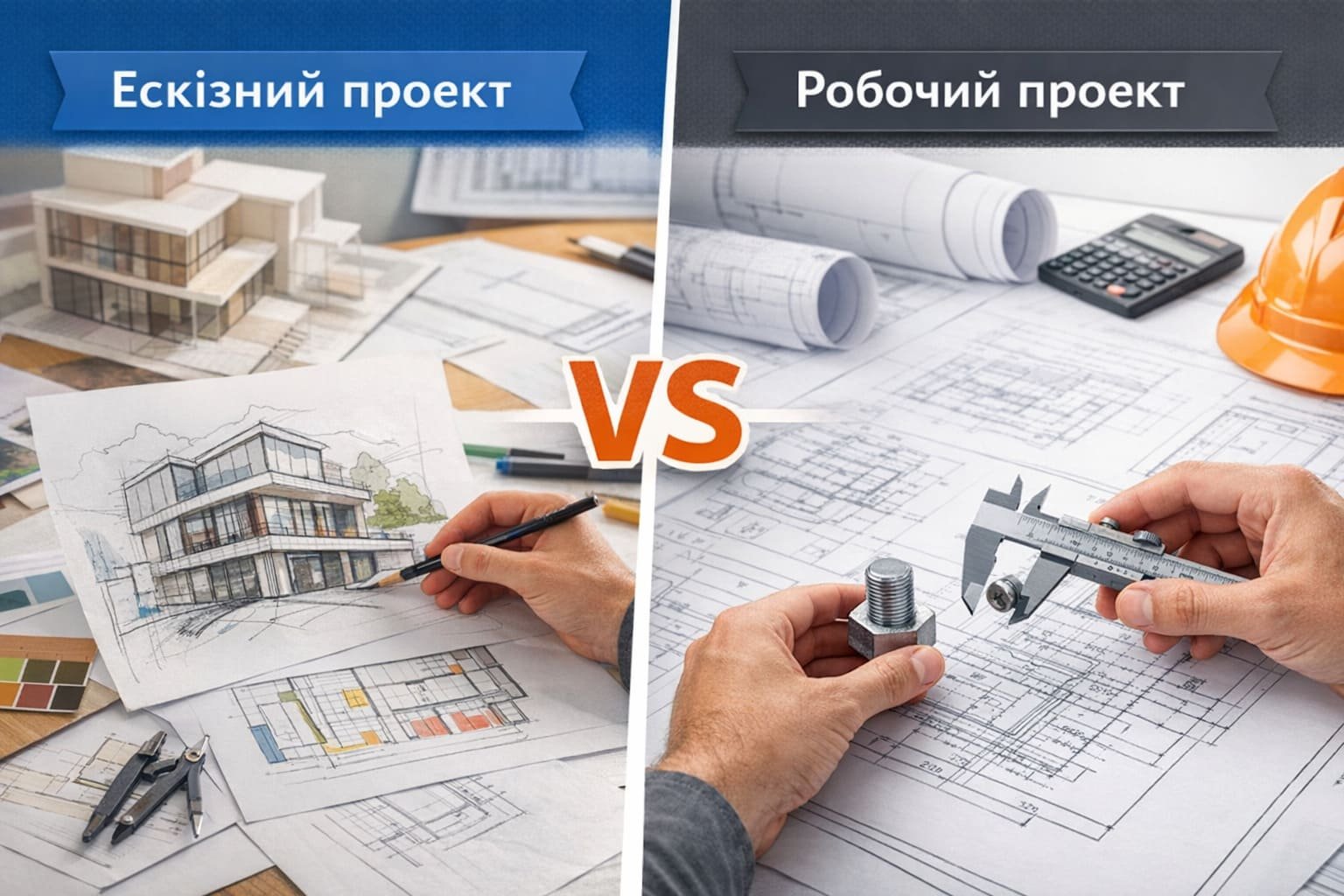
A sketch design is the preliminary concept of a future building. Its main purpose is to show the overall idea of the object, its appearance, planning solutions, key functional areas, and general architectural logic.
At this stage, the project vision is formed. The client can assess how the building will look, how удобно the space is organized, and whether the proposed solution meets expectations and functional needs.
A sketch design usually includes:
The main goal of this stage is to approve the concept of the future object before moving to detailed technical development.
A working project is a complete set of technical documentation used directly for construction work. If a sketch design answers the question “what do we want to build?”, the working project explains “how exactly should it be built?”.
This stage contains accurate drawings, dimensions, construction details, material specifications, structural solutions, and engineering systems. It is the documentation used by builders, contractors, and technical specialists on site.
A working project may include:
A working project is needed to ensure that construction is carried out accurately, clearly, and without critical mistakes on site.
The key difference lies in the level of detail and practical purpose. A sketch design helps approve the concept, style, planning, and overall vision of the building. A working project is required to implement that concept in actual construction.
Simply put:
At the sketch stage, changes can be made faster and at a lower cost. At the working project stage, all decisions should already be carefully coordinated, since any changes may affect deadlines, budget, and technical execution.
A sketch design is usually needed at the beginning, when the client is still shaping the vision of the object, comparing options, or trying to understand what the future building will look like. It is useful for preliminary approval of ideas and for general planning.
In some cases, a sketch design is enough for initial discussions, concept presentations, or a preliminary budget estimate. However, it is not sufficient for full construction implementation.
A working project becomes necessary when construction moves from the idea stage to real implementation. Without it, contractors do not have clear instructions, which almost always leads to inaccuracies, rework, and additional costs.
If the client wants a predictable result, quality control, and a clear construction process, a working project is an essential stage.
Sometimes clients try to move directly to the technical part without giving enough attention to the concept. In other cases, they stop at the sketch stage and assume that is enough for construction. Both approaches can create serious problems.
A sketch design helps find the right architectural solution, while a working project makes it possible to implement that solution without unnecessary risks. The proper sequence of these stages is what leads to a high-quality, functional, and technically sound result.
A sketch design and a working project are two different but interconnected stages of design. The sketch helps shape and approve the idea, while the working project turns it into precise technical documentation for construction.
Understanding this difference allows clients to manage the process better, avoid unnecessary expenses, and make informed decisions at every stage. If you need a professional approach to design, it is important to work with specialists who can support the project comprehensively — from concept to complete documentation.


